Stakeholder Engagement and Research
To ensure our design addressed actual user needs, I implemented a structured focus group methodology based on IDEO.org's approach:
Space Exploration: Participants explored the current space, sharing initial reactions
Guided Reflection: Used sticky notes to gather feedback on strengths, weaknesses, and emotional responses
Interactive Feedback: Mapped emotional responses visually
Open Discussion: Facilitated dialogue to elaborate on participant feedback
This 30-minute session yielded valuable insights that significantly shaped our final design:
Spatial Organization: Users found the existing space "random" and "not cohesive"
Seating Preferences: Current seating lacked warmth and comfort
Balance Needs: Users desired both private spaces and communal areas
Amenities: Participants wanted organized storage, refreshments, sensory items, and aesthetic enhancements
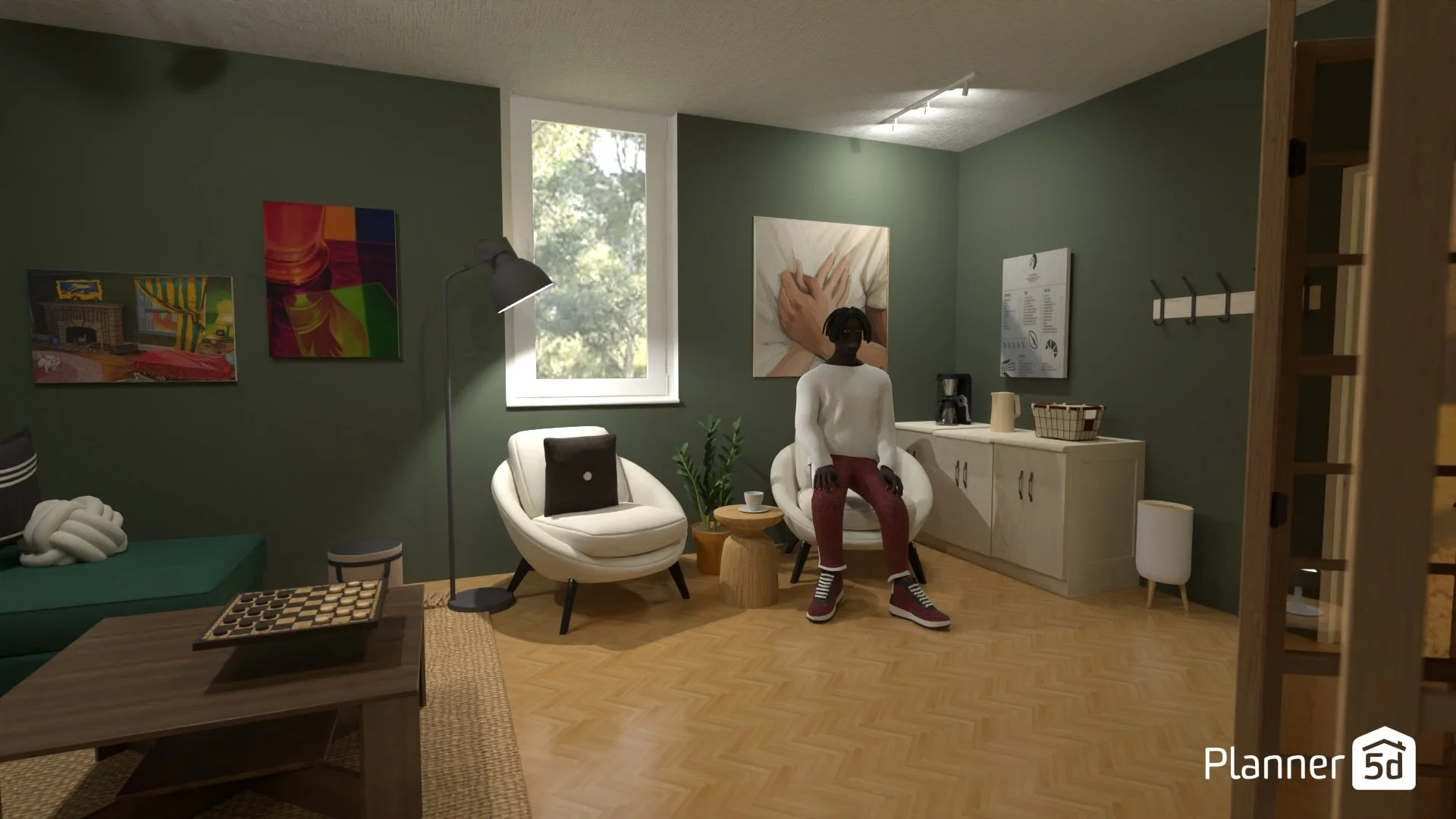
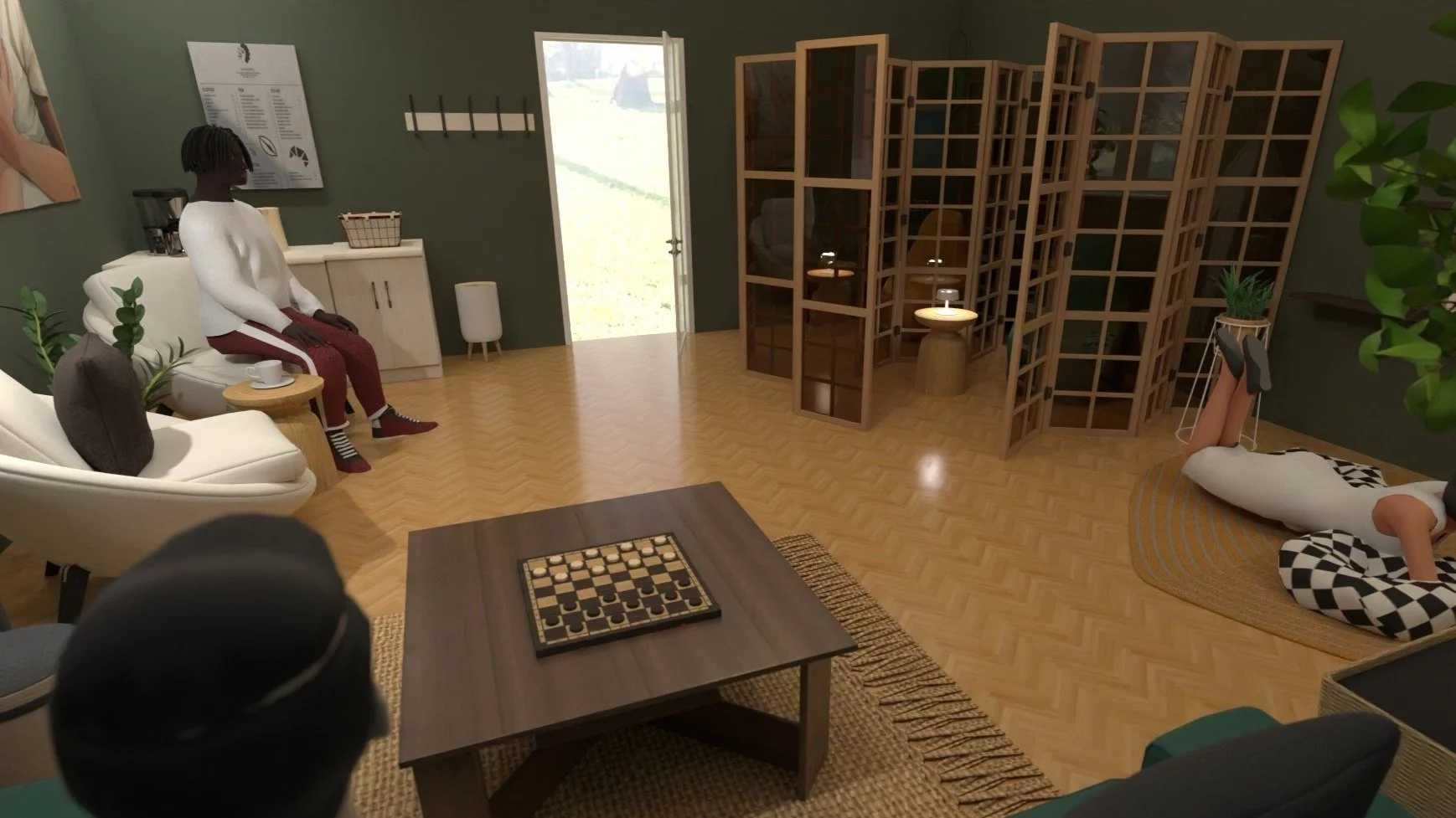
My initial concept prioritized creating a third space that felt uniquely personal for users. Key elements included:
Floor seating for informal relaxation
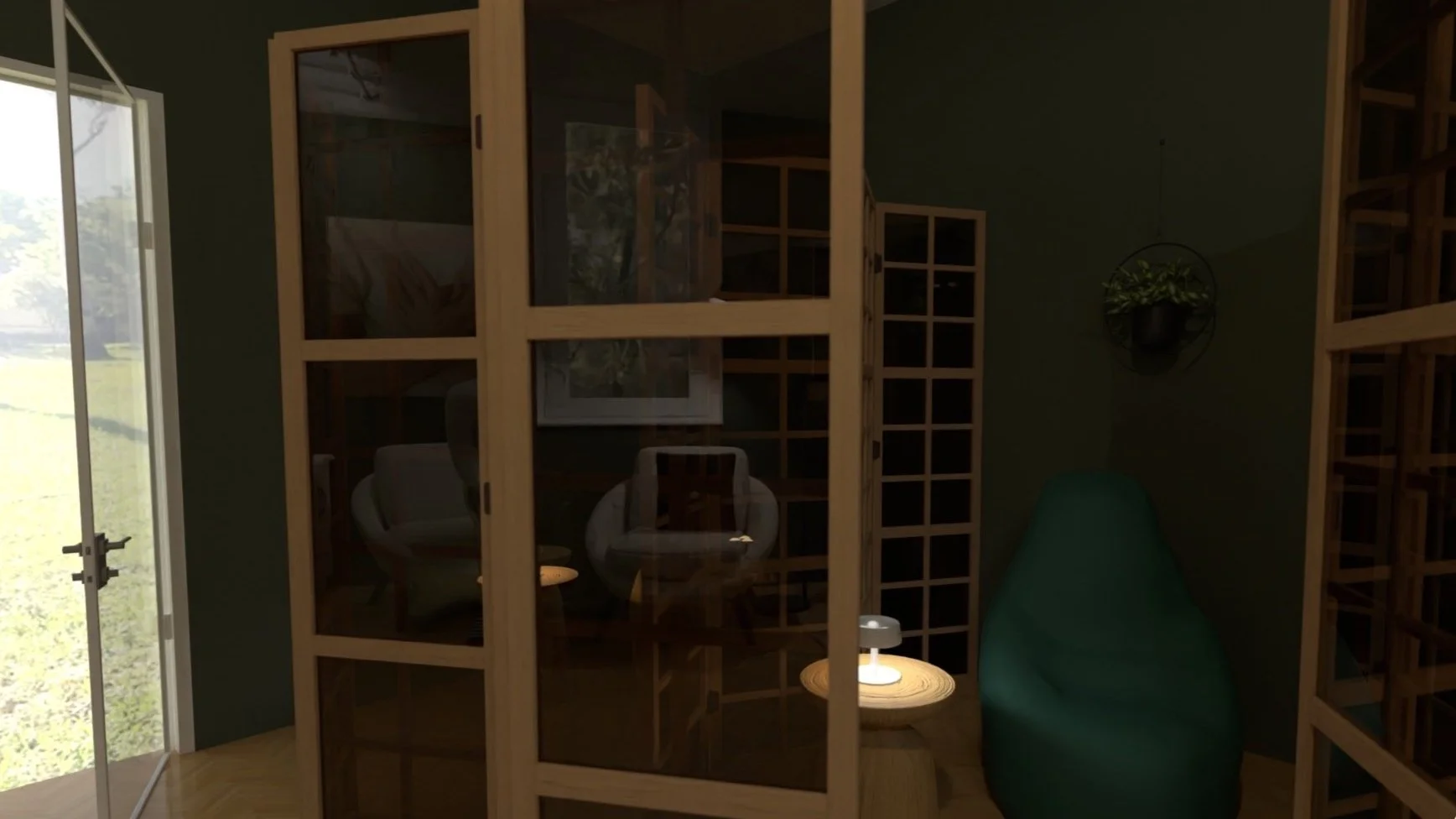
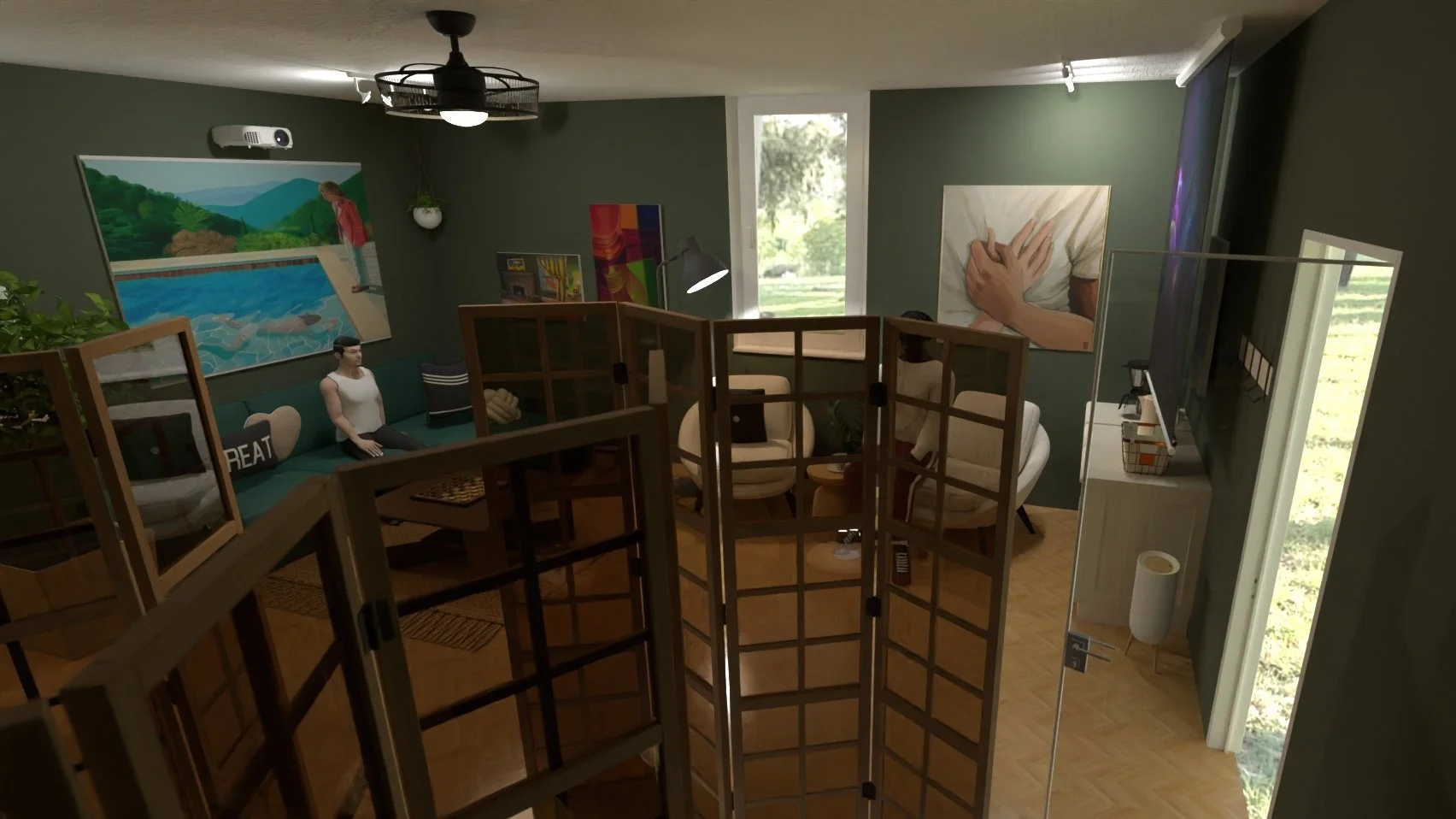
Secluded relaxation nooks for privacy
Soft spot lighting for a serene ambiance
Amenities like fidget toys, board games, and a coffee maker
Strategic negative space to enhance the cozy atmosphere
My Contributions and Skills
Throughout this project, I demonstrated several key design skills:
Research and Methodology: Implemented structured user research through IDEO.org-inspired focus groups
Stakeholder Engagement: Facilitated meaningful user feedback sessions and incorporated insights
Spatial Planning: Created functional zones that balance private and communal needs
Visual Communication: Developed clear presentation materials and 3D renderings
Collaborative Design: Integrated multiple perspectives into a cohesive final concept
Problem-Solving: Addressed the challenge of balancing competing spatial needs
Accessibility Considerations: Ensured inclusive design elements throughout the space